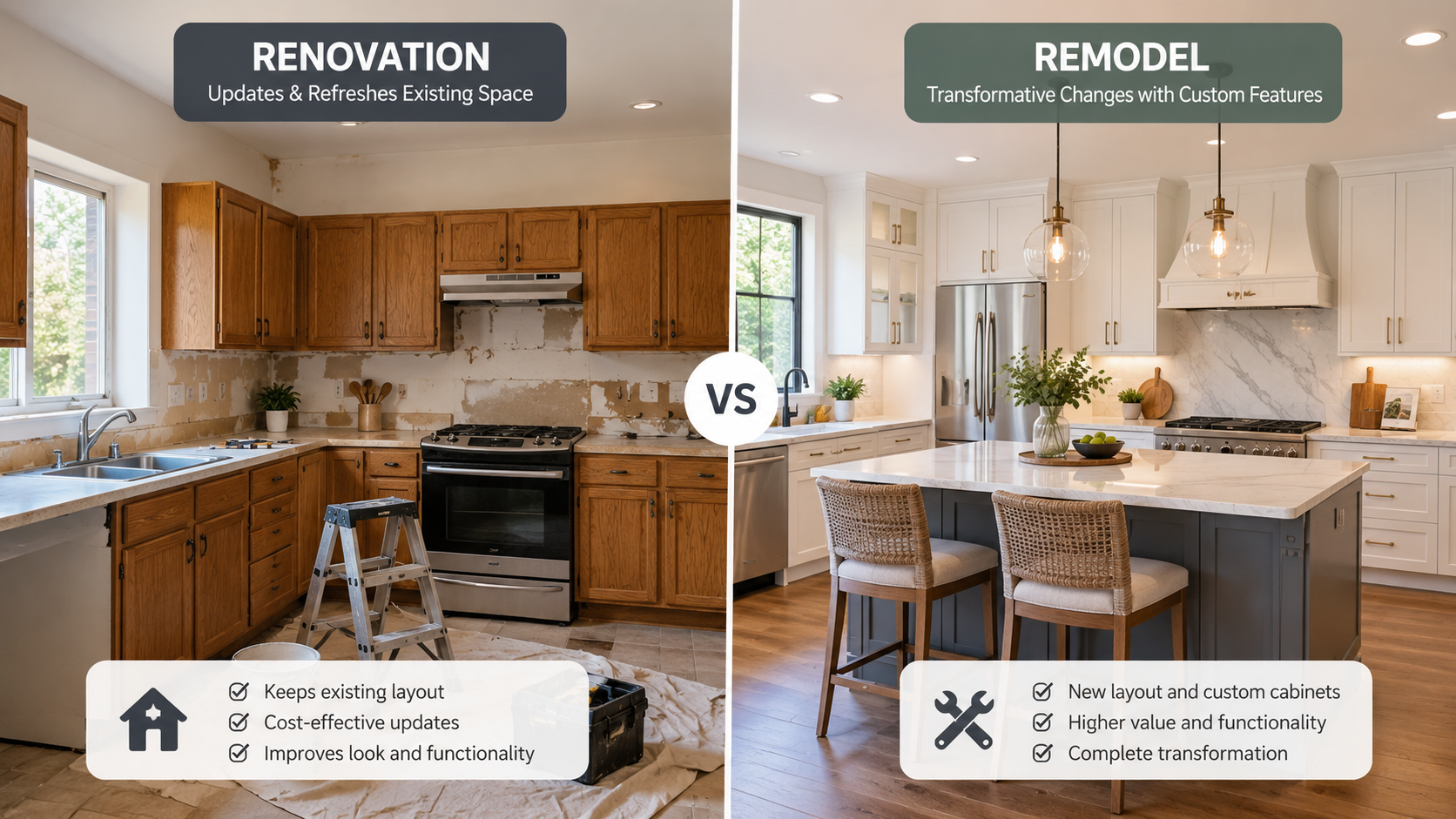
“Remodel” and “renovation” get used interchangeably so often that most homeowners never stop to ask if they actually mean different things. They do. The difference between a kitchen remodel and a kitchen renovation comes down to how much of the room’s structure and layout actually changes, and that distinction affects your budget, your timeline, and who you need on the job.
Contractors, designers, and homeowners often use the two words loosely, which is part of why the confusion sticks around. But when you’re the one paying for the project, the distinction stops being academic. Knowing which one you’re actually planning changes how you budget, how long you should expect to live without a working kitchen, and whether you need an architect or engineer involved at all.
Before you call a contractor or start pulling cabinet doors off their hinges, it helps to know which project you’re actually planning. If you’d rather skip ahead and talk through your specific kitchen, you can reach out to our team directly.
What Is a Kitchen Renovation?
A renovation restores or updates what’s already there without changing the room’s layout. Think refinished cabinets instead of new ones, updated countertops, fresh paint, new hardware, or replaced flooring. The plumbing stays where it is, the walls stay where they are, and the footprint of the kitchen doesn’t move.
Renovations work well when the bones of the kitchen are solid, but the finishes feel dated. If your cabinets are structurally sound but the doors look tired, or your countertops are worn but your layout still works for how you cook, a renovation gets you a fresh kitchen without touching the structure underneath it.
A typical kitchen renovation might include:
- Refacing or repainting existing cabinet boxes instead of replacing them
- New countertops in the same footprint
- Updated backsplash, hardware, and light fixtures
- New flooring installed over the existing layout
- Repainted walls and updated trim
None of that requires moving a sink, rerouting a gas line, or tearing into a wall, which is exactly what keeps renovations faster and more affordable than remodels.
What Is a Kitchen Remodel?
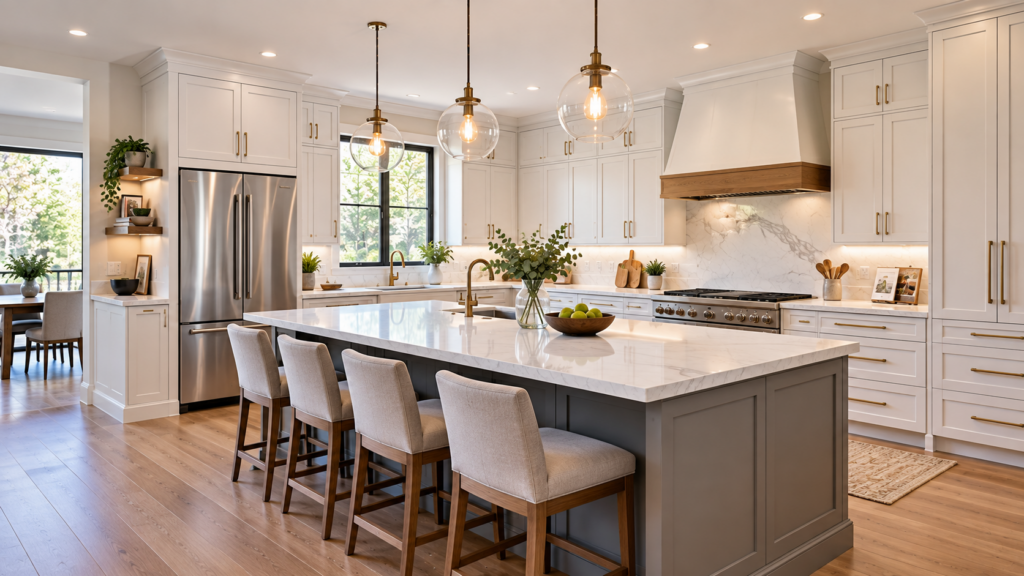
A remodel changes the structure, not just the surface. That can mean moving a wall to open the kitchen to the living room, relocating the sink or stove, adding an island, or reconfiguring the layout entirely. Remodels often involve new plumbing lines, electrical work, and permits, since you’re changing how the space is built rather than how it looks.
This is the route homeowners take when the current layout doesn’t work anymore, whether that’s not enough counter space, an awkward traffic flow, or a kitchen that feels closed off from the rest of the house.
A typical kitchen remodel might include:
- Removing or relocating a wall to open the floor plan
- Moving the sink, stove, or refrigerator to a new position
- Adding an island with new plumbing or electrical
- Reconfiguring cabinet layout to fit the new floor plan
- Structural or electrical upgrades tied to the new design
Because these changes touch the building’s structure and systems, a remodel usually brings in more than just a cabinet maker. Plumbers, electricians, and sometimes a structural engineer become part of the project.
The Real Difference Between Kitchen Remodel and Renovation
The core difference between a kitchen remodel and a renovation is scope. A renovation updates what exists in place. A remodel changes the structure and layout of the room. Both can include new cabinets and countertops, but a remodel is the one that moves walls, plumbing, or electrical, while a renovation works within the existing footprint.
That distinction matters more than it sounds like it would, because it determines nearly everything else about the project, including cost, how long you’ll be without a working kitchen, and whether you’ll need permits at all.
Cost Comparison: Renovation vs. Remodel
Renovations are generally the more budget-friendly option since you’re not paying for structural work, new plumbing runs, or electrical rerouting. Refinishing or replacing cabinet fronts, swapping countertops, and updating fixtures can transform a kitchen’s look for a fraction of what a full remodel costs.
Remodels cost more because the scope is bigger. Moving a wall means engineering and permits. Relocating a sink means new plumbing. Adding an island might mean new electrical for outlets and lighting. None of that is required for a renovation, which is why remodels typically run several times higher than a comparable renovation on the same square footage.
A few things push the cost of either project up or down: the quality of cabinetry you choose, whether you’re keeping or replacing appliances, the countertop material, and how much of the existing layout you’re able to reuse. Custom cabinetry costs more than stock or refaced cabinets, but it’s also the piece that tends to have the biggest impact on how the finished kitchen actually looks and functions.
The actual numbers vary widely based on materials, cabinet quality, and how much structural work is involved, so getting a quote based on your specific kitchen is the only reliable way to know what either option will cost you.
Not sure what your project would run?
Get a free, no-obligation quote based on your actual kitchen, not a national average.
Request Your Free Quote →
Timeline: How Long Does Each Take?
Renovations tend to move faster because there’s no demolition of walls or structural changes to work around. A cabinet refacing and countertop swap can often be done in a couple of weeks, depending on material lead times.
Remodels take longer. Once you’re moving plumbing or electrical, you’re working around inspections and permit approvals, and the timeline stretches from weeks into months depending on how much of the kitchen is changing. A full layout change with new cabinetry, appliances, and finishes is a bigger undertaking than most homeowners expect going in.
Material lead times affect both project types, but they matter more on a remodel simply because more materials are involved. Custom cabinetry, in particular, is usually built to order rather than pulled from stock, so the timeline for a remodel needs to account for design, fabrication, and installation as three separate phases rather than one continuous build.
Common Mistakes When Choosing Between the Two
Homeowners run into trouble most often when they pick a project type based on budget alone rather than what the kitchen actually needs. A few patterns show up repeatedly:
Choosing a renovation when the layout is the real problem. New cabinets and countertops won’t fix a kitchen where the sink, stove, and fridge are positioned awkwardly. If the workflow doesn’t work, cosmetic updates won’t change that.
Underestimating what a remodel actually requires. Moving a single wall or relocating a sink can trigger permit requirements, inspections, and coordination between multiple trades that a simple renovation never touches.
Starting demolition before confirming the scope. Once walls are open, it’s common to find out a wall is load-bearing or that plumbing runs differently than expected, which turns what looked like a renovation into a remodel mid-project.
Getting a clear scope defined before work starts, ideally with input from our design and installation team, avoids most of these problems.
Signs You Need a Renovation
- Your cabinets are structurally solid but look outdated
- The layout works fine for how you cook and move through the space
- You want a fresh look without a major budget or long project timeline
- You’re updating for resale but don’t need to change the floor plan
Signs You Need a Remodel
- The current layout creates bottlenecks or wasted space
- You want an island, and there isn’t room for one without moving things
- You’re combining the kitchen with an adjacent room
- Plumbing or electrical needs to move to make the space work better
Which One Is Right for Your Kitchen?
If your kitchen’s layout already works and you just want it to look and feel new, a renovation gets you there without the cost or disruption of structural changes. If the layout itself is the problem, no amount of new paint or hardware will fix that, and a remodel is the project that actually solves it.
Either way, the difference between a kitchen remodel and a renovation isn’t just terminology. It changes your budget, your timeline, and what kind of contractor you need on the job. Our team has handled both types of projects for Chico homeowners, from simple cabinet refacing to full layout changes with custom cabinetry built to fit the new space. You can see examples of both in our project gallery, or read more about how we approach a project from first consultation to final install.
If you’re still not sure which one fits your kitchen, reach out to our team with a few details about your space and what’s bothering you about it. We can tell you fairly quickly whether you’re looking at a renovation or a remodel.
Ready to find out which one your kitchen needs?
Tell us a bit about your space and what’s not working. We’ll help you figure out if it’s a renovation or a full remodel, and what it would take.
Schedule Your Free Consultation →
Frequently Asked Questions
What is the main difference between a kitchen remodel and a kitchen renovation?
A renovation updates the finishes and fixtures in a kitchen without changing its layout or structure. A remodel changes the actual structure, including the layout, plumbing, or electrical. Both can involve new cabinets and countertops, but only a remodel moves walls or relocates plumbing.
Is a kitchen renovation cheaper than a remodel?
Generally yes. Renovations avoid the cost of structural work, new plumbing runs, and electrical rerouting, which are often the biggest cost drivers in a remodel. A renovation updating cabinets, countertops, and finishes typically costs a fraction of a full layout change.
How long does a kitchen remodel take compared to a renovation?
A renovation can often be completed in a couple of weeks, depending on material lead times. A remodel takes longer because it involves permits, inspections, and structural work, often stretching from several weeks to a few months depending on scope.
Do I need a permit for a kitchen renovation?
Usually not, since a renovation doesn’t change the structure, plumbing, or electrical layout. A remodel almost always requires permits because it involves structural changes, new plumbing lines, or electrical work.
Can I add a kitchen island with just a renovation?
It depends on your existing layout. If there’s already room for an island without moving plumbing or electrical, it may qualify as a renovation. If adding an island requires new electrical for outlets or lighting, that pushes the project into remodel territory.
Which one adds more value to my home, a remodel or a renovation?
Both can add value, but they solve different problems. A renovation refreshes a kitchen that already has a workable layout, which appeals to buyers looking for a move-in-ready space. A remodel fixes a layout that doesn’t work, which can matter more in homes where the current kitchen is a clear drawback.